
Immunology and Inflammation Services for Translational Drug Discovery
Integrated in vitro, in vivo, and ex vivo immunology solutions to accelerate discovery and preclinical development across autoimmune, inflammatory, and immuno-oncology programs.
ChemPartner delivers integrated small molecule CMC services that support drug candidates from early development through IND, NDA, and commercialization.
Our coordinated platform combines API development and manufacturing, formulation development, analytical characterization, solid-state R&D, process optimization, pilot-scale production, large-scale manufacturing, and quality management within a unified development strategy.
Combining deep immunology expertise, disease-relevant pharmacology, and translational analytics within a unified platform
A connected immunology platform linking mechanism, efficacy, and translation across in vitro, in vivo, and ex vivo systems.
Our partnership philosophy
- Immune cell activation, proliferation, and differentiation
- Cytokine release and immune signaling pathways
- Receptor occupancy and ligand engagement
- Cell–cell interaction and co-culture systems
- Functional and phenotypic immune profiling
Core technologies include
- Multi-color flow cytometry (FACS)
- ELISA, Luminex, ELISPOT
- QuantiGene transcriptomics
- AlphaLISA signaling assays
Disease Areas and Representative Models
Respiratory Inflammation
Evaluate anti-inflammatory and respiratory therapies using disease-relevant models that capture airway inflammation, immune activation, and lung-function endpoints.
Rheumatoid Arthritis
Evaluate anti-inflammatory and respiratory therapies using disease-relevant models that capture airway inflammation, immune activation, and lung-function endpoints.
Multiple Sclerosis
Advance CNS immunology programs with EAE models that enable evaluation of neuroinflammation, demyelination, and treatment response.
Inflammatory Bowel Disease
Study intestinal inflammation and therapeutic response in acute and chronic colitis models designed to support IBD discovery programs.
Skin and Hypersensitivity
Characterize immune-mediated skin inflammation and hypersensitivity responses across psoriasis, dermatitis, allergy, and immune-complex models.
Systemic Inflammation
Investigate systemic immune activation, cytokine release, inflammasome signaling, and inflammatory disease mechanisms using fit-for-purpose in vivo models.
In Vitro Immunology Assays
Mechanistic and functional immune profiling across primary cells and complex co-culture systems. Our in vitro platform enables highly customizable evaluation of immune responses across multiple cell types, pathways, and therapeutic modalities. Using whole blood, PBMCs, and primary immune cells, we generate robust functional and mechanistic data aligned to your target biology.
Immune Cell Function and Differentiation
We support detailed functional characterization across key immune populations:
Co-Culture and Functional Systems
Biologically relevant systems to evaluate immune engagement and mechanism:
Effector Function and Modality-Specific Assays
Support for complex therapeutic formats:
Immune Signaling and Inflammation Pathways
Targeted assays for pathway interrogation and drug mechanism:
Effector Function and Modality-Specific Assays
Support for complex therapeutic formats:
Readouts and Analytical Outputs
Multi-dimensional data generation for mechanistic insight:
Lorem ipsum
Comprehensive immune cell characterization and functional assessment:
JAK Signaling Assay in Human Blood
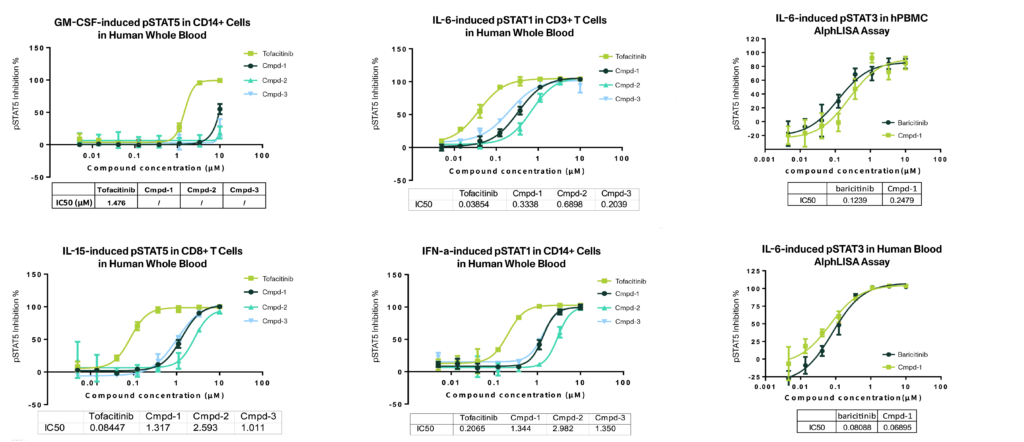
In practice: JAK / pSTAT signaling quantified in human whole blood, linking assay readouts to translational context.
Representative human blood-based JAK signaling workflow showing cytokine-specific pathway interrogation with FACS and AlphaLISA readouts across defined immune-cell populations.
Screen cytokine-driven JAK/pSTAT responses in fresh human whole blood and PBMCs to generate clinically relevant pathway data.
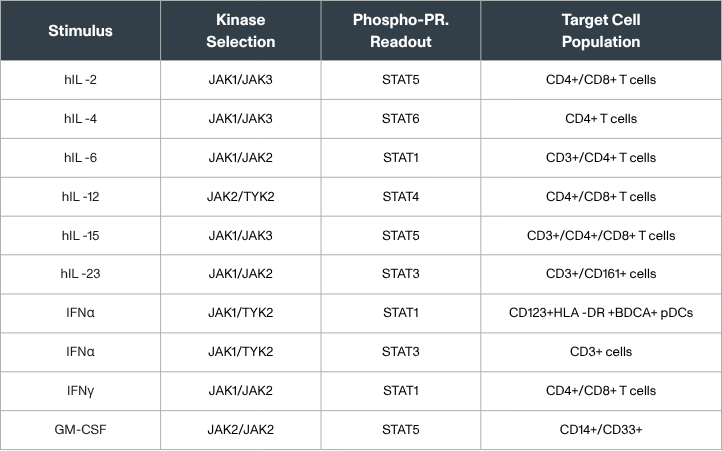
Combine immune-cell population analysis with sensitive phospho-protein quantification to characterize JAK-pathway modulation across defined cell subsets.
In Vivo Immunology and Inflammation Models
Disease-relevant models to evaluate efficacy, pharmacodynamics, and mechanism of action.
These models enable precise assessment of therapeutic efficacy, immune modulation, and mechanism of action.
Our in vivo platform supports comprehensive pharmacological evaluation across a wide range of immune-mediated diseases. We offer:
Type-II Collagen Induced Arthritis (CIA) in Rats
In practice: collagen-induced arthritis in rats, demonstrating our in vivo disease-model capability end to end.
Type-II collagen-induced arthritis model evaluated by HE staining, Safranin O staining, and x-ray across control, model, and compound groups, illustrating multi-endpoint assessment of inflammatory arthritis.
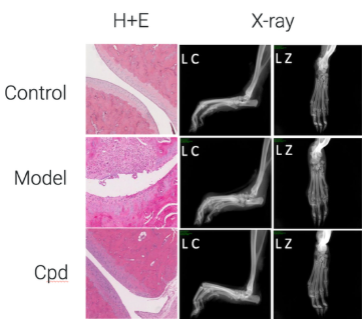
Type-II collagen-induced arthritis (CIA) in rats. Clinical scores, joint swelling, histology, and X-ray images compare control, CIA model, and compound-treated groups.
Type-II collagen-induced arthritis (CIA) in rats. Clinical scores, joint swelling, histology, and X-ray images compare control, CIA model, and compound-treated groups.
Ex Vivo Analysis Platforms
Translational analytics to connect in vivo results with mechanistic and biomarker insight.
Our ex vivo platform bridges biology and decision-making through advanced immunological analysis across diverse models, matrices, and modalities.
Immunophenotyping and Functional Biomarkers
Comprehensive immune cell characterization and functional assessment:
PD/PK and Mechanistic Analysis
Translational analytics connecting exposure to pharmacodynamic response:
Model Systems
Diverse in vivo model platforms for ex vivo analysis:
Sample Types
Matrices supported across ex vivo sample collection:
Modalities & Species
Ex vivo assays supported across relevant therapeutic modalities and preclinical species.
Modalities:
Analytical Technologies
Apply complementary analytical platforms to generate robust cellular, biomarker, and pharmacodynamic readouts.
Custom Assay Design
Tailor assay panels and endpoints to your program’s target biology, mechanism of action, and translational biomarker strategy.
TIL Analysis and Multi-Color Flow Cytometry
In practice: tumor-infiltrating lymphocyte profiling by multi-color flow, an ex vivo readout on in vivo samples.
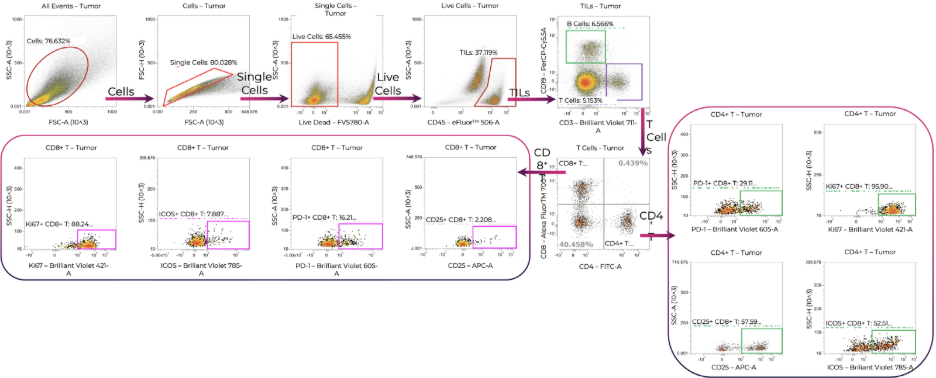
Representative ex vivo immune profiling workflow for checkpoint and activation marker analysis using multi-color flow cytometry.
Advance Your Immunology Program
Whether you’re exploring early immune mechanisms or validating efficacy in complex disease models, ChemPartner helps design the right experimental strategy for your program.
